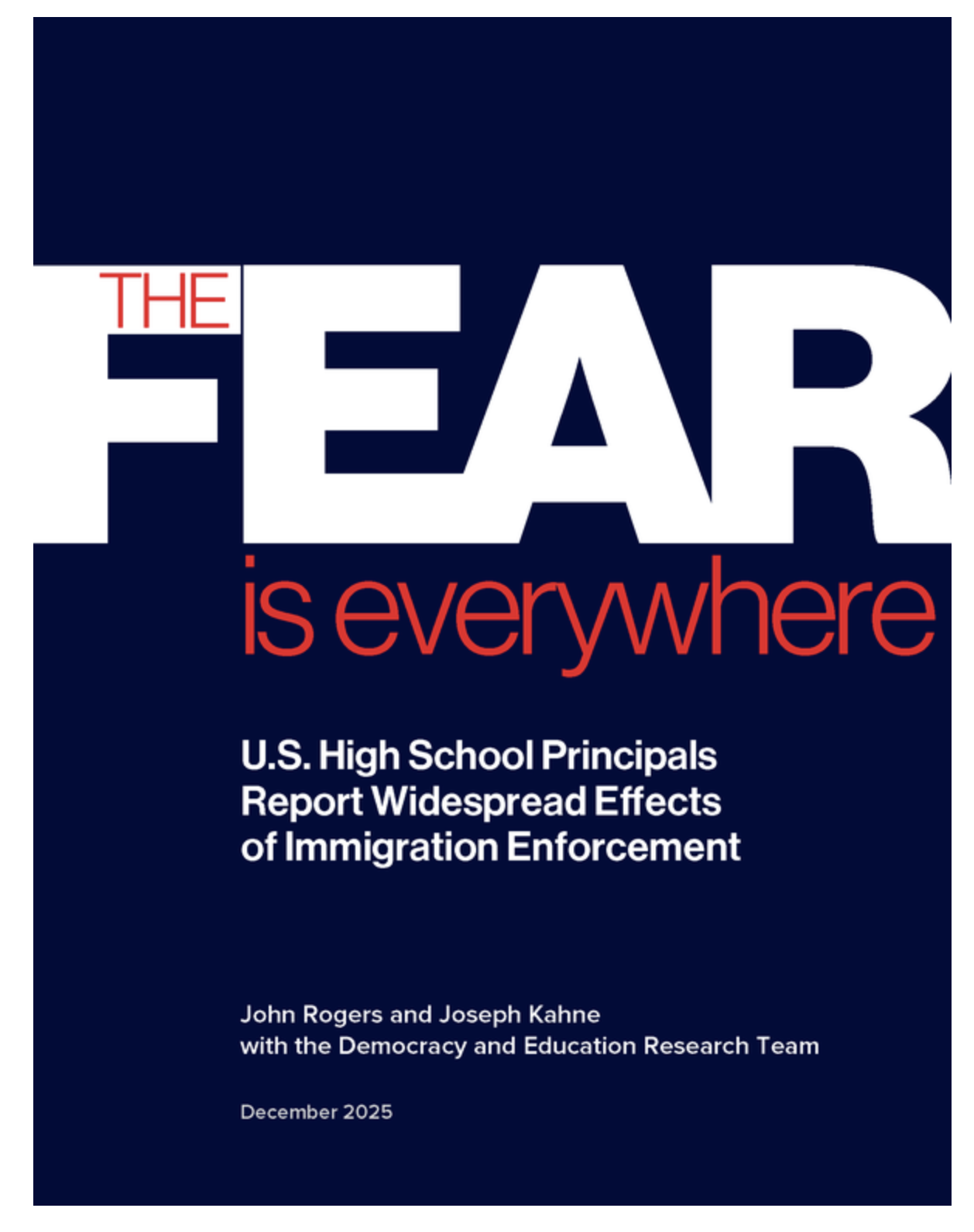
A study from the UCLA Institute for Democracy, Education and Access (UCLA IDEA) finds that intensified immigration enforcement during the early months of the second Trump administration is having widespread and troubling effects on high schools across the United States.
The report, “The Fear is Everywhere: U.S. High School Principals Report Widespread Effects of Immigration Enforcement,” is based on a nationally representative survey of 606 public high school principals conducted between June and August 2025, along with in-depth interviews with 49 principals from every region of the country. Researchers say the findings offer one of the most comprehensive national portraits to date of how immigration enforcement policies are reshaping daily life in American schools.
“Given the harsh, even hateful rhetoric and aggressive immigration actions of the Trump administration, the effect on students and schools should not be surprising to anyone,” said John Rogers, a UCLA education professor, director of UCLA IDEA and lead researcher of the project. “But the widespread nature of harmful impact and deep level of concern are alarming. As one principal told us, the fear is everywhere.”
The research was conducted following a major policy shift rescinding longstanding federal guidance that had limited immigration enforcement in “sensitive locations,” including schools. Principals reported that the change intensified anxiety among immigrant students and families and raised concerns about whether schools can continue to function as safe spaces.
Despite the 1982 U.S. Supreme Court decision in Plyler v. Doe, which affirmed undocumented students’ constitutional right to public education, many principals said fear of detention or deportation is effectively undermining that right in practice by suppressing attendance and participation.
According to the survey, 70.4% of public high schools reported being impacted by heightened concerns among students from immigrant families about their own well-being and that of their families. Nearly two-thirds of principals (63.8%) said students from immigrant families missed school due to immigration policies or related political rhetoric, and 57.8% reported that immigrant parents or guardians left the community during the school year.
In interviews, principals described chronic absenteeism, anxiety and trauma symptoms affecting students’ ability to learn. A New York principal said immigrant students and families “live in a culture of fear,” with post-traumatic stress and anxiety interfering with academic success.
Some principals described basic daily routines being disrupted. A Tennessee principal said some immigrant parents were afraid to leave home to buy groceries, affecting whether students were eating properly. In Nebraska, a principal reported that some students stopped attending school regularly because they did not want to leave younger siblings alone when parents stayed home to avoid potential encounters with immigration authorities or were detained.
More than one-third of principals (35.6%) reported incidents of bullying directed toward students from immigrant families. Some described students taunting Hispanic classmates with comments such as, “Can I see your papers?” or “Go back home.”
At the same time, schools are responding. More than three-quarters of principals (77.6%) said they have created a plan to respond to visits from federal agents. Nearly half developed plans to support students if a parent or guardian is deported, and 44.8% said they created professional development for staff on how to support students from immigrant families.
“The fact that more than three-quarters of principals said they have created a plan to respond to intensified immigration enforcement is astonishing and a critical indicator of the level of fear and anxiety that has spread across American schools,” Rogers said.
The report has drawn national attention, including coverage in the Los Angeles Times, The Guardian and The Boston Globe.
Researchers conclude that the effects extend beyond individual families and are reshaping the climate of public education nationwide. As one California principal told researchers, “It just doesn’t feel very American.”
The full report is available here.